Call Now
+91 9441388981
Why Choose Jute
Why Jute is the Smarter Choice
- Jute is 100% natural and biodegradable, so it breaks down safely in the soil instead of staying for hundreds of years like plastic.
- It is grown from a plant that farmers can cultivate every year, so it is a renewable and sustainable resource.
- Jute bags are very strong and durable, so one jute bag can replace many thin plastic bags over its lifetime.
- Jute fabric does not release toxic gases or harmful chemicals during use, making it a safer choice for air, soil, and water.
- When jute decomposes, it enriches the soil with natural nutrients, instead of leaving behind microplastics or toxic residues.
- 1 hectare of jute absorbs over 15 tonnes of CO₂, which is several times more than trees absorb on the same area.
- The jute industry supports more than 5 million livelihoods, especially in poor rural regions where every job makes a big difference.
- By choosing jute bags, you help cut plastic pollution, lower carbon emissions, and support farmers and artisans at the same time.
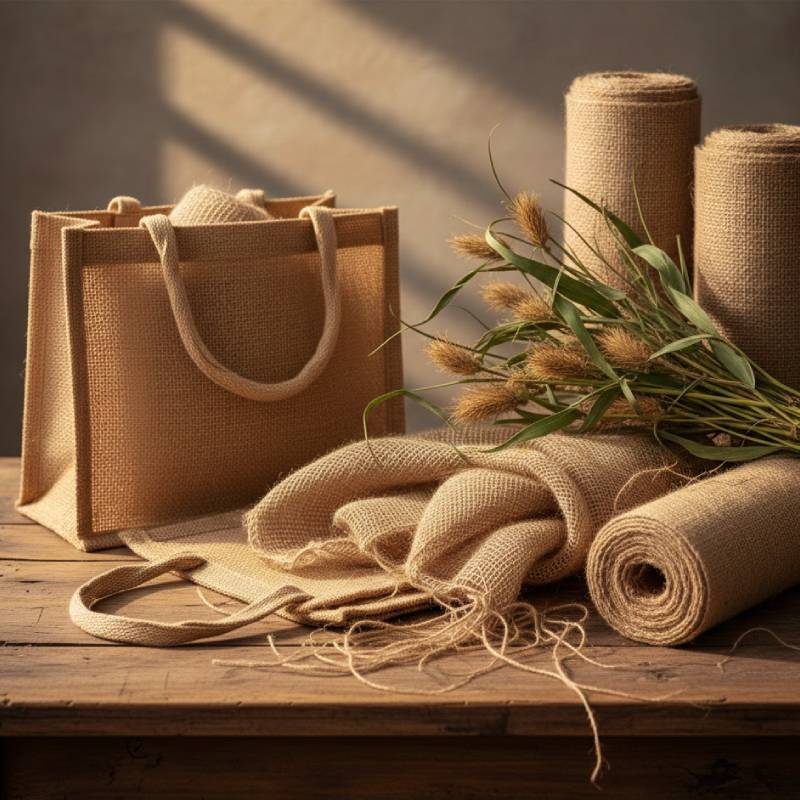
By choosing jute, you support a natural fiber that absorbs over 15 tonnes of CO₂ per hectare and sustains more than 5 million rural livelihoods, while helping to reduce plastic waste.
Key Benefits of Jute
Completely Biodegradable

Naturally decomposes and enriches the soil with valuable nutrients.
Renewable & Sustainable

Abundantly available and cultivated year after year.
Exceptionally Durable

Outlasts thousands of plastic bags in lifespan.
Eco-Friendly

Produces no toxic gases or pollutants during its lifecycle.
Supports Livelihoods

Provides employment to over 5 million people in some of the world’s poorest regions.
High Carbon Absorption

One hectare of jute absorbs over 15 tonnes of CO₂ — several times more than trees.